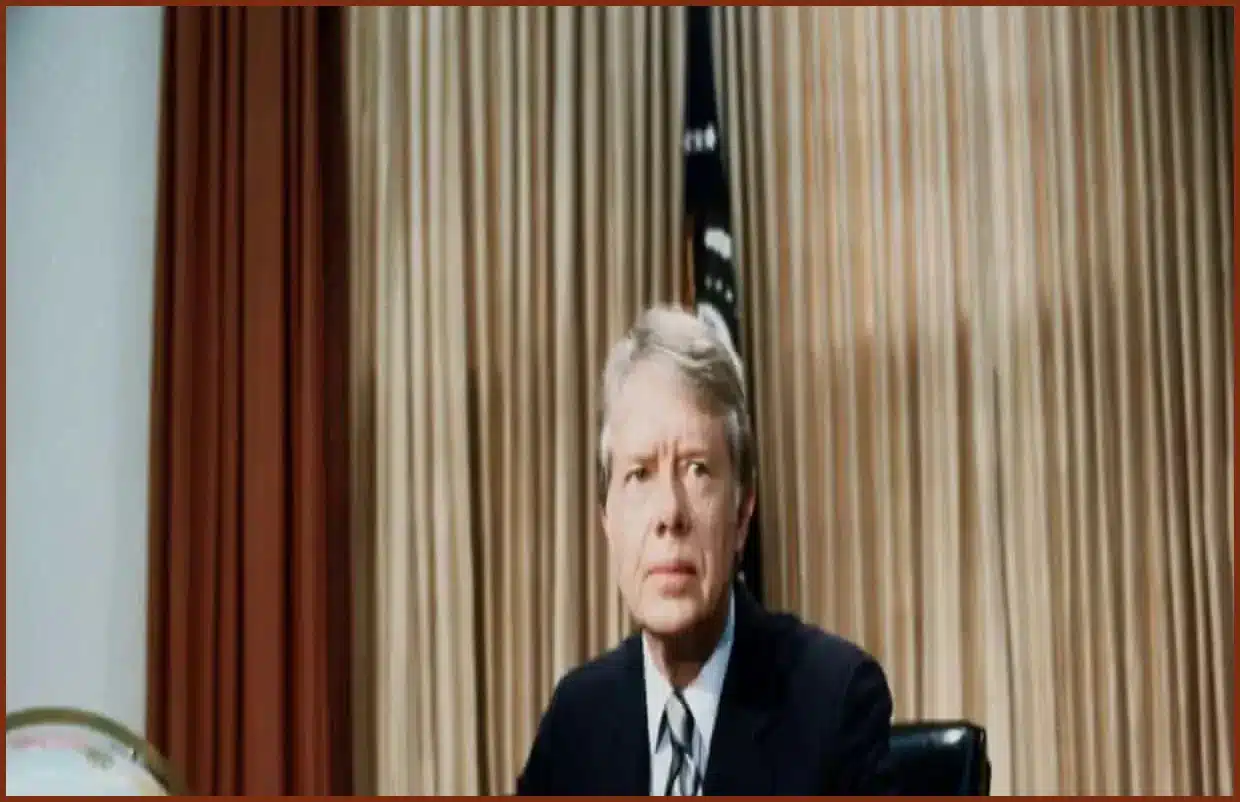
As the United States prepares for a pivotal midterm election season, President Donald Trump finds himself deeply entangled in an unresolved military conflict with Iran that threatens his party’s control of Congress. The situation has drawn striking historical comparisons to the political crisis that doomed the presidency of Jimmy Carter nearly half a century ago. Just as Carter’s re-election ambitions in 1980 were shattered by an intractable hostage crisis in Tehran, Trump’s political future is now heavily pressured by an ongoing war that he has struggled to conclude.
The current conflict, which Trump initiated alongside Israel nearly six months ago on February 28, has reached a critical bottleneck. A ceasefire agreement established under a memorandum of understanding (MOU) in June collapsed this week after its 60-day term lapsed without a formal resolution. The breakdown of the truce has left Iran firmly in control of the Strait of Hormuz, a vital maritime corridor that handled one-fifth of the world’s oil supply before the hostilities began. By maintaining a tight grip on the waterway, Tehran has succeeded in driving up global energy prices, stoking domestic inflation, and escalating the cost of living for American consumers.
This economic pressure arrives at the worst possible time for the Republican party, which already faced a difficult path to retaining its congressional majorities in November. Public support for the military campaign has steadily eroded, and recent polling indicates that a majority of American voters believe their financial situation has deteriorated since Trump returned to the White House in January 2025. This widespread economic discontent mirrors the famous question Ronald Reagan posed to voters during his 1980 debate with Carter: "Are you better off than you were four years ago?"
The parallels to the Carter administration are substantial, even if the exact circumstances differ. Carter’s crisis began in November 1979, when Iranian revolutionaries seized the US embassy in Tehran, holding 52 diplomats and military personnel hostage. The situation turned catastrophic in April 1980 when a high-risk rescue operation had to be aborted after three of the eight deployed helicopters suffered mechanical failures. During the evacuation, a helicopter collided with a transport aircraft, killing eight US servicemen and deepening the administration's public humiliation. The hostages were ultimately released after 444 days, minutes after Reagan was sworn in on January 20, 1981. Decades later, Carter admitted his greatest regret was "not sending more helicopters," according to Larry Sabato, director of the Center for Politics at the University of Virginia.
Sabato notes that Trump now faces a similar strategic deadlock because he is unable to easily change course. "Carter couldn’t change course, and maybe that’s what’s most applicable, because Trump can’t change course either," Sabato observed, explaining that the president was motivated primarily by a desire for an easy foreign policy triumph. According to Sabato, advisers persuaded Trump to initiate the conflict by promising him it would be a quick victory, comparable to a rapid intervention in Venezuela followed by action in Cuba.
In response to his mounting difficulties, Trump has fluctuated between downplaying the crisis, denying its severity, and issuing aggressive rhetorical threats. During an appearance at the Nassau County Police Academy in Garden City, New York, on August 14, Trump dismissed concerns over rising fuel costs, arguing that paying $4 a gallon was an acceptable price to prevent "an evil country" from obtaining a nuclear weapon. Later, in an interview with Fox News, he threatened to "bomb the shit out of" Oman if the nation obstructed American efforts to resolve the conflict. He also claimed on social media that the Strait of Hormuz was a "new US territory"—a declaration that prompted swift mockery from Iranian officials. More recently, Trump threatened to unleash "Economic Warfare and Isolation on an unprecedented scale" against Iran and any country offering a "lifeline" to Tehran, though he provided no specific details on how this would be executed.
Analysts suggest these erratic shifts reflect a lack of viable military or diplomatic options, a vulnerability that Iranian leaders are eager to exploit. Vali Nasr, an international relations professor and Iran expert at Johns Hopkins University, stated that Tehran is fully committed to making Trump suffer the electoral consequences of starting the war. Rather than allowing Trump to quiet the conflict or declare a premature victory, Iranian officials are pushing for escalation. Nasr revealed that Iran has given the US administration a four-week deadline to return to and fully implement the June MOU. If the US fails to comply, Iran plans to expand its attacks on Gulf targets, US military bases, and other American assets, keeping the war at the center of public attention.
To prepare for potential domestic unrest and counter external intelligence operations, Iran has also reshaped its internal security apparatus. Hardline cleric and former intelligence chief Hossein Taeb has been appointed to lead the Basij volunteer militia, with instructions to convert the group into a neighborhood surveillance network aimed at rooting out internal opposition and suspected Israeli infiltration. Mehrzad Boroujerdi, a political scientist at Missouri Science and Technology University, noted that the Iranian regime is in no hurry to negotiate because they do not view their own economic situation as critical, and they are fully prepared to capitalize on Trump's domestic political vulnerability.
The economic toll on the United States is poised to worsen as the midterms approach. Alan Eyre, a former State Department Iran specialist, warned of an impending inflation spike driven by a race between "two ticking economic clocks" that favors Tehran. Eyre pointed to the steady rise in diesel fuel prices, which are critical to global supply chains. Diesel prices have climbed from $3.70 a gallon a year ago to $5.06 a month ago, $5.30 last week, and $5.44 currently. Despite efforts to stabilize the market by releasing oil from the Strategic Petroleum Reserve and coordinating with international partners, Eyre warned that the system's resilience is rapidly depleting.
According to Eyre, Trump's least damaging option would be to negotiate the reopening of the Strait of Hormuz under Iranian control, as Tehran is unlikely to relinquish its grip anytime soon. However, doing so would represent a tacit admission of defeat, and maritime insurance companies would likely be slow to declare the waterway safe, delaying any economic recovery. Meanwhile, Trump appears indifferent to the electoral prospects of congressional Republicans. To prepare for a potential Democratic takeover of Congress, Trump recently appointed right-wing lawyer Will Scharf as White House legal counsel to defend against anticipated congressional investigations and subpoenas. He has also begun questioning the integrity of the upcoming November vote, echoing his rhetoric from the 2020 presidential election.
For Iran's aging leadership, delivering a decisive political blow to Trump remains a highly coveted goal. An electoral defeat for the Republican party would empower congressional Democrats to launch intense investigations into the administration's war conduct. Nasr noted that if Trump cannot resolve the conflict, it will quickly overshadow the start of the 2028 presidential cycle. Ultimately, inflicting a major political defeat on Trump would provide immense satisfaction to an Iranian leadership that despises him far more than they did Jimmy Carter.
Related Articles

Md. Kazi Bijoy is a dedicated tech enthusiast and content creator with a passion for digital innovation. With years of experience in the tech industry, he specializes in breaking down complex topics into easy-to-understand guides. When he isn’t writing, he explores the latest gadgets and researches emerging trends in the digital world.