The landscape of global counterterrorism has undergone a dramatic transformation over the past quarter-century. While the catastrophic events of September 11, 2001, in the United States instantly altered the security trajectory of the Western world, India’s strategic shift was forged through decades of enduring cross-border attacks. This long evolution recently culminated in decisive military action and the unveiling of a comprehensive new national security doctrine.
On September 11, 2001, 19 al-Qaida terrorists hijacked four passenger planes, crashing two into the Twin Towers in New York and one into the Pentagon outside Washington, D.C., resulting in a death toll of nearly 3,000. In response, the United States launched its most extensive military campaign since the Vietnam War, hunting al-Qaida and its leader, Osama bin Laden, in Afghanistan for nearly two decades. Osama bin Laden was eventually tracked down and killed in Pakistan on May 2, 2011. This pivotal event established a strict mandate for the United States to prevent any future large-scale attacks on its mainland.
For India, the confrontation with systemic terrorism began much earlier. In the early 1990s, Pakistan initiated a strategy to "bleed India through a thousand cuts" using cross-border terrorism, leading to heavy casualties, particularly in the region of Kashmir. Initially, India’s responses were largely defensive, passive, and reactive, characterized by localized military operations, diplomatic freezes, and heightened border security.
A critical early test occurred on December 24, 1999, shortly after the Kargil War, when Air India Flight IC-814 was hijacked. Under intense public pressure, the Indian government agreed to release two Pakistan-based terrorists, Ahmed Omar Shiekh and Masood Azhar, in exchange for more than 160 civilian hostages. Following his release, Masood Azhar founded Jaish-e-Mohammad (JeM), the terrorist group that subsequently carried out an attack on the Indian Parliament on December 13, 2001. In response, India initiated a full-scale military mobilization under Operation Parakaram, which ultimately concluded without any combat engagement.
The turning point for India's internal security infrastructure came on November 26, 2008, during the Mumbai terror attacks. Often referred to as India’s 9/11, the 26/11 attacks drew global attention to the threat of cross-border terrorism in South Asia. Although India did not launch a direct military retaliation against Pakistan at the time, the incident prompted a sweeping overhaul of national security. This led to the creation of the National Investigation Agency (NIA) as the country's central counterterrorism law enforcement body. Intelligence coordination was upgraded, coastal security was placed under the authority of the Indian Navy, and the Multi Agency Center—originally proposed in December 2001 by the Kargil Review Committee—was fully empowered as a primary platform for intelligence exchange.
A decisive shift in India's strategic calculations occurred after Prime Minister Narendra Modi's administration took office in 2014. The government adopted a policy of active deterrence. Following a JeM attack on an army camp in Uri, Kashmir, on September 18, 2016, the Indian Army executed its first cross-border surgical strikes, destroying multiple terrorist launch pads and infrastructure inside Pakistan. When JeM terrorists targeted a police convoy in Pulwama, Kashmir, on February 14, 2019, killing 40 soldiers, India escalated its response. On February 26, 2019, the Indian Air Force crossed into Pakistani airspace to strike a JeM training camp in Balakot.
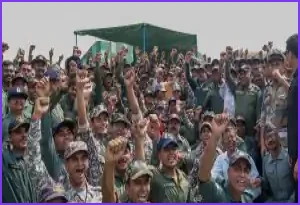
The strategic threshold was crossed once again following a devastating terror attack in Pahalgam on April 22, 2025. Expressing the nation's outrage, Prime Minister Modi vowed to track the perpetrators "to the ends of the Earth." On May 7, 2025, the Indian Armed Forces launched Operation Sindoor, targeting the core of the Pakistan-based terror network. Within 96 hours, Indian forces destroyed nine major terrorist camps and struck key military assets, including airfields and radar installations, forcing Pakistan to request a ceasefire. On May 13, 2025, Prime Minister Modi met with soldiers at Adampur Air Force Base in Punjab to mark the conclusion of the operation.
This operational evolution is mirrored by a shift in global terrorist tactics. Over the past 25 years, large, hierarchical organizations like al-Qaida and the Islamic State have largely given way to smaller, decentralized networks, franchise-style operations, and lone-wolf attackers. Modern terrorist entities increasingly leverage advanced technologies, including drones, cyber warfare, artificial intelligence, encrypted communications, and cryptocurrencies. Rather than focusing solely on territorial acquisition, contemporary campaigns often seek to disrupt social cohesion and inflict financial damage through indirect cyberattacks on critical banking and energy infrastructure.
To counter these modern, multi-dimensional threats, India formalized its strategic doctrine on February 23, 2026, by unveiling PRAHAAR, the nation's first comprehensive National Counter Terrorism Policy & Strategy. PRAHAAR establishes a unified framework to prevent and respond to terrorist activities and radicalization, utilizing a coordinated "whole of government" and "whole of society" approach. This policy transitions India’s counterterrorism strategy from traditional military campaigns to a broader, multi-layered framework integrating intelligence, financial surveillance, border control, cyber monitoring, and deradicalization, backed by precision standoff military capabilities.
You have reached the limit of 2 free articles this month.
The 9/11 attacks led to profound changes in the United States as well, especially in matters of internal security. There was a clear mandate that no matter what, there cannot be another 9/11 type of incident on the American mainland ever again.
Related Articles

Md. Kazi Bijoy is a dedicated tech enthusiast and content creator with a passion for digital innovation. With years of experience in the tech industry, he specializes in breaking down complex topics into easy-to-understand guides. When he isn’t writing, he explores the latest gadgets and researches emerging trends in the digital world.