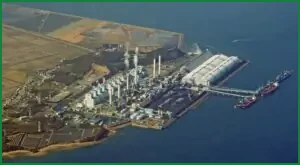
South Korea's reliance on coal-fired electricity has rebounded significantly, making coal the nation's primary source of power during the first seven months of 2026. The surge comes just a year after Seoul gained international praise at COP30 for joining the Powering Past Coal Alliance, where it pledged to decommission 40 of its 61 coal units by 2040. However, operational setbacks in the nuclear sector, combined with severe disruptions in the global gas market and a relaxation of environmental regulations, have forced the country to increase coal output to meet energy demand.
Data from January to July 2026 shows coal accounted for 30 percent of South Korea's total electricity generation, surpassing nuclear power, which had been the top source the previous year. Overall coal generation jumped 18 percent during this seven-month span. To support this demand, thermal coal imports from Australia surged by 241 percent year-on-year in the June quarter, according to figures from Australia's Office of the Chief Economist. Australia, which has approved more than ten new coal mine projects or expansions since 2022, was simultaneously serving as president of climate negotiations at COP31 in Turkiye. Chris Bowen, Australia's minister for climate change and president of negotiations at COP31, did not respond to queries regarding the export increase.
The domestic power supply was constrained significantly by a steep decline in nuclear output. According to monthly statistics from KEPCO, nuclear generation fell 17.0 percent in the first half of 2026 to 82.08 TWh, down from 98.87 TWh recorded during the same period in 2025. State-owned utility operator Korea Hydro & Nuclear Power attributed the downturn to overlapping schedule overhauls, which caused combined fleet maintenance days to surge from 404 to 1,048 days. Analysis from the Center for Research on Energy and Clean Air noted that the shortfall was further aggravated by aging reactors reaching the end of their 40-year operating licenses. According to the World Nuclear Association, the Hanbit 1 and 2 reactors remained idle while waiting for regulatory decisions. Meanwhile, the Kori 4 reactor near Busan, which was shut down in August 2025, received regulatory clearance only last month to extend its operational life through 2035.
Liquefied natural gas, traditionally relied upon to balance supply fluctuations, failed to offset the nuclear deficit. Global LNG supply chains buckled in 2026, causing widespread impacts across Asian and Pacific economies. Energy think tank Ember reported that South Korea's LNG-based power generation dropped by approximately 6 percent. Yun Sun-jin, dean of the Graduate School of Environmental Studies at Seoul National University, noted that the situation highlights structural vulnerabilities in energy planning. "This winter shows that heavy dependence on imported fossil fuels, whether LNG or coal, is itself an energy security problem," Yun said. "LNG is not only a fossil fuel, it also leaves Korea exposed to price shocks and supply disruptions. If gas is meant to be the bridge, the bridge itself is unstable."
To safeguard power availability, Seoul loosened a key regulatory cap in March that had previously limited coal plant operations to curb fine particulate emissions. The policy change permitted coal facilities to operate at up to 100 percent capacity on days with low fine-dust levels. With colder winter conditions driving up energy consumption, officials acknowledge that pollution levels are set to climb. A spokesperson for South Korea's Ministry of Climate, Energy, and Environment confirmed that increased coal power generation inherently elevates fine dust concentrations, stating that "there is no particular standard to apply" when deciding to ramp up plant output on specific days.
Public health experts and researchers have expressed concern over the environmental consequences, particularly in heavily industrial regions such as South Chungcheong province. A 2023 study by CREA and Solutions for Our Climate calculated that pollution from coal-fired facilities caused nearly 2,000 premature deaths over a two-year period. While no updated mortality estimates have been released for 2026, the climate ministry acknowledged that increased coal reliance directly leads to higher fine dust levels. Yun emphasized that "the government needs clear, public criteria for when coal plants are ramped up, so that health protections during high-concentration periods are not eroded."
Academic observers emphasize that economic pressures should not override health safeguards. Yoo Jong-hyun, an associate professor at Seoul National University's Graduate School of Public Administration, remarked that "a temporary increase in coal generation may be justified if LNG supplies are constrained or prices become exceptionally high, but only if the economic benefits outweigh the environmental and health costs." Yoo added that "higher LNG prices alone should not justify abandoning these environmental measures."
As South Korea prepares to initiate its eighth fine-dust management program on December 1, uncertainty remains regarding how long coal units will be allowed to run at maximum output on clear days. The climate ministry spokesperson stated that the duration of full-capacity operations "remains to be seen" and will ultimately depend on evolving domestic and international energy market conditions and fuel pricing.
You have reached the limit of 3 free articles this month.
Related Articles

Mr. Udoy is a professional Web Developer and Blogger with 7+ years of experience in the tech world. He specializes in web architecture and digital storytelling. As the driving force behind worldincidents.com, he focuses on delivering high-quality, well-researched content to a global audience.