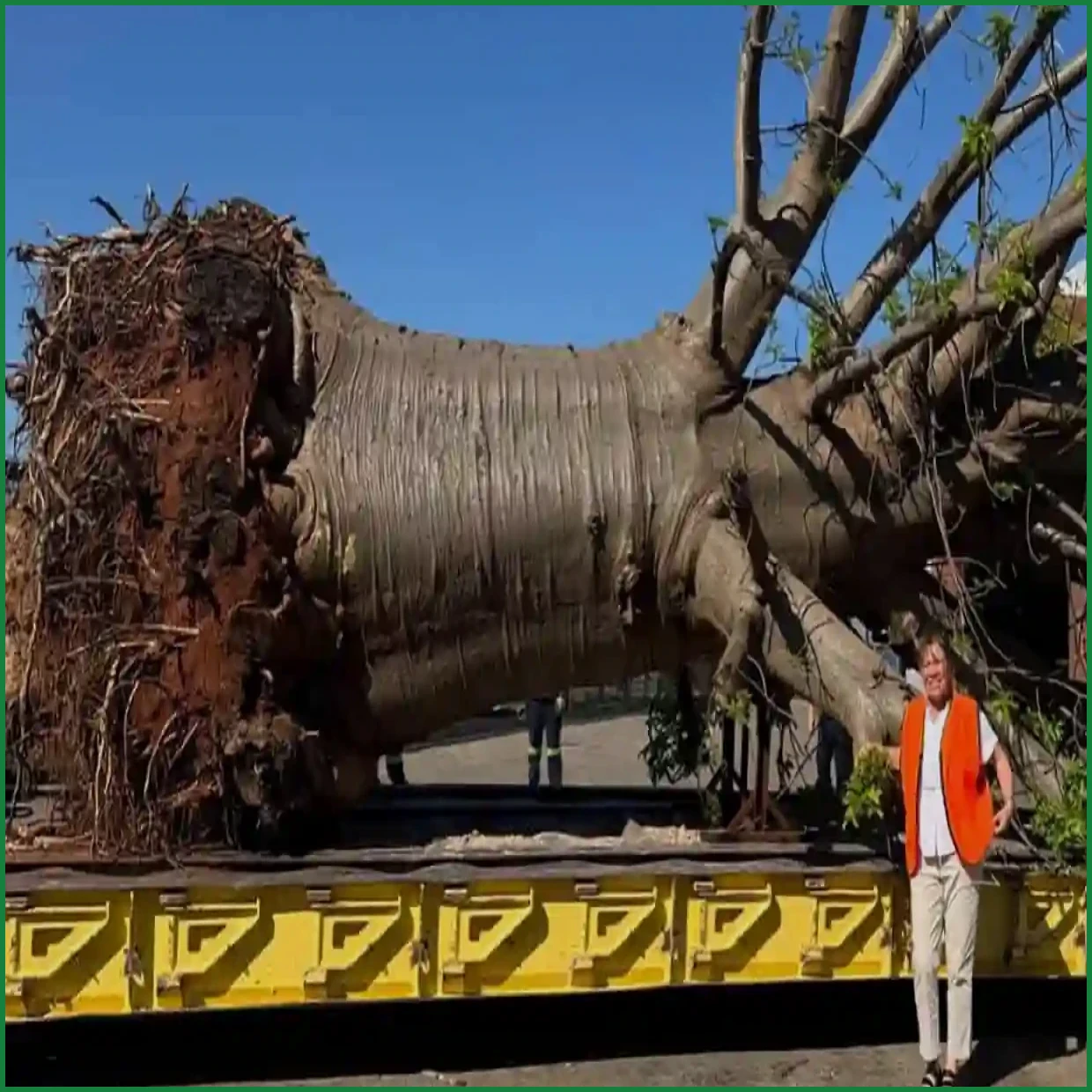
Conservationists in South Africa are engaged in an urgent effort to replant five centuries-old baobab trees after an exporter illegally uprooted the massive specimens in an attempt to ship them thousands of miles to Georgia. The protected trees arrived on Wednesday at a nature reserve in Timbavati, located in north-eastern South Africa, where teams are preparing to re-establish them in the ground and support them with structural cables during their recovery.
The trees had been impounded at a warehouse facility in Durban since July, when government authorities intervened after discovering they were being moved without required regulatory permits. South Africa's Department of Forestry, Fisheries and the Environment confirmed that the intended foreign destination for the baobabs was Georgia, though officials did not publicly disclose the identity of the buyer.
Law enforcement authorities have launched a criminal case against the owner of a landscaping business allegedly responsible for illegally harvesting and transporting the trees. Under South African national law, baobabs are officially protected, requiring formal permits before anyone may cut down, disturb, or relocate them.
The physical relocation operation has encountered delays owing to the sheer size of the specimens, which required specialized heavy-haul transport vehicles designed for abnormal loads. The five baobabs weigh between 19 and 29 tonnes each, measure up to 4.5 metres (15 feet) in diameter, and reach heights of up to 12.5 metres.
Sarah Venter, founder of the Baobab Foundation and leader of the replanting initiative, expressed confidence that the trees stand a strong chance of surviving if they are planted promptly. She noted that moving baobabs during their dormant winter phase between May and October is ideal because the trees shed their leaves. However, as spring begins in November, the trees draw on internal water reserves to sprout new foliage, creating an urgent window to get them rooted back in the soil.
Venter explained that because baobabs feature shallow root systems, deep planting is unnecessary, and root structures tend to regenerate fairly quickly. Once positioned, workers will secure the trees with cables to ensure stability and construct electric fencing to safeguard them against damage from wild elephants. Estimated to be between 200 and 300 years old, the trees could live for hundreds more years if they recover, as baobabs regularly reach ages of up to 1,000 years.
Experts note that exporting living baobabs as ornamental features is extremely rare due to the intense technical challenges involved. David Newton, programme office director for east and southern Africa at Traffic, an NGO monitoring wildlife trade, highlighted that using baobabs ornamentally is highly unusual because of how difficult it is to dig them out, transport them, and successfully re-establish them in new ground.
Emphasizing the ecological role of the species, Kenyan landscape designer, lecturer, and horticulturist Wambui Ippolito described the tree as a crucial biodiversity anchor that serves as a self-contained ecosystem. Natural cavities within baobabs offer nesting shelter for animals including bats, bush babies, grey-headed parrots, and the southern ground hornbill, while their fruit provides food for elephants, monkeys, and warthogs.
Ippolito also pointed to the deep cultural heritage surrounding the species, describing it as sacred across communities in African nations such as Senegal, Mali, and Ghana, where generations of ancestors have gathered beneath its branches throughout human history.
The attempt to export the South African baobabs mirrors a major incident in Kenya four years ago, when eight baobabs were uprooted for shipment to Shekvetili Dendrological Park in Georgia. That facility is owned by Bidzina Ivanishvili, a billionaire and former prime minister of Georgia who has amassed a collection of ancient trees shipped across the Black Sea. Although environmentalists initially decried the Kenyan export as biopiracy and succeeded in temporarily halting the transfer, the shipment was eventually allowed to proceed.
Related Articles

Meet Md. Rubel Rana
As a core contributor to Worlddincidents.com, Rubel Rana brings a unique perspective to the world of journalism. Whether it’s deep-diving into historical trivia or covering the latest global headlines, Rubel Rana is committed to delivering high-quality, high-impact articles. Their writing blends meticulous research with a compelling voice, helping readers stay informed and curious about the world around them.