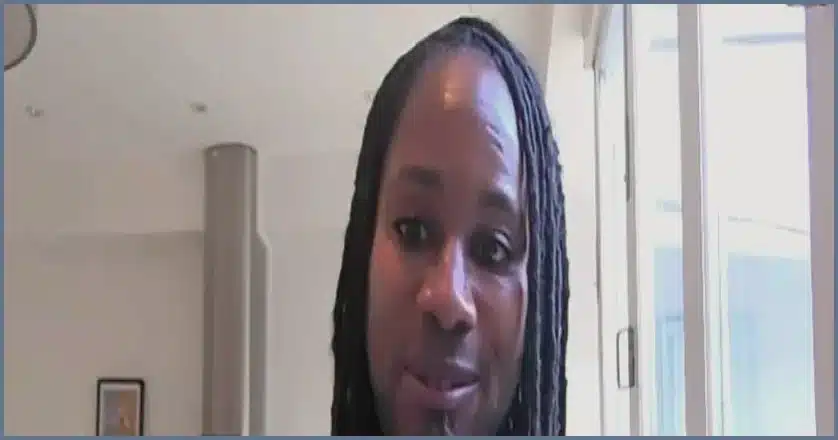
Jason Arday, who made history as the youngest Black professor at the University of Cambridge, has died in London at the age of 41. His death occurred on Friday, exactly one week after he stepped down from his academic post following intense public allegations of plagiarism and biographical fabrication.
According to a statement released by his family, Arday was the target of a relentless and hostile campaign designed to undermine his professional standing. "Jason was subjected to a campaign of sustained abuse for the more than three years since he accepted the role of Professor at Cambridge University by those who would leave no stone unturned in their quest to undermine him," the family stated. They described him as a gentle man who always sought the best in others, adding that the campaign of misinformation ultimately became too overwhelming. "We are in shock to have lost this amazing father, partner, brother, uncle and son," they said.
The Metropolitan Police in London reported that officers responded to a call regarding an unresponsive 41-year-old man inside a property at 3:12 p.m. local time on Friday. Although authorities did not formally name Arday, they confirmed the man was pronounced dead at the scene and his next of kin had been notified. Police described the death as unexpected but noted that it is not currently believed to be suspicious. An investigation into the circumstances remains ongoing.
The news of Arday's passing prompted widespread grief and condolences from public figures and academic leaders. U.K. Education Secretary Lucy Powell expressed her deep shock and sadness in a social media post, offering "my heartfelt condolences are with his friends and family at this very sad time." Powell added, "I urge people to give them privacy through this incredibly difficult period & to remember there are real people with loved ones involved." Similarly, Cambridge Vice-Chancellor Professor Deborah Prentice released a statement expressing desperate sadness over the tragic news and extending deep sympathies to Arday's family and friends.
Arday officially resigned from his position at Cambridge on August 5, citing the immense personal cost of the controversy. In his resignation statement, he wrote, "The relentless accusations, speculation and public commentary have taken a profound toll on me and on those I love." However, he explicitly stated that his departure should not "be mistaken for an acceptance of the narratives that have surrounded me." He explained that it was "simply the decision of someone who has reached the limits of what any person should reasonably be expected to endure."
Arday's rapid ascent in British academia had previously been celebrated as an extraordinary triumph over adversity. He joined the University of Cambridge faculty in 2023 at the age of 37, capturing public attention with his inspiring life story. Arday, who was autistic and dyslexic, did not speak until he was 11 years old and was unable to read or write until the age of 18. Raised in south London, he went on to earn a college degree in education and physical education, followed by two master's degrees and a teaching qualification. He eventually completed his PhD at Liverpool John Moores University.
Reflecting on his childhood challenges, Arday had shared his experiences in a 2023 interview, noting that few educators expected him to succeed. "Not many teachers at school had any belief in me," he recalled. "Educational psychologists and behavioral therapists were … very robust in their assessment that I would struggle in later life and I would need assisted living."
The academic controversy that preceded his death began last month when allegations of plagiarism were publicized by Nathan Cofnas, a philosopher of biology and former Cambridge researcher. Cofnas, an outspoken critic of diversity, equity, and inclusion (DEI) initiatives, had previously written that in a true meritocracy, "Blacks would disappear from almost all high-profile positions outside of sports and entertainment."
Arday had firmly denied any intentional academic misconduct, explaining that any errors in his published work were entirely inadvertent. He and his supporters argued that the intense scrutiny was part of an ideologically and racially motivated campaign targeting his scholarly focus on race, inequality, and diversity. His supporters maintained that the attacks went far beyond normal academic critique.
Prior to the recent controversy, Liverpool John Moores University had investigated allegations concerning Arday's doctoral thesis. According to The Times of London, that inquiry concluded there was no evidence of academic misconduct. However, subsequent reports by both The Times of London and The Telegraph highlighted potential discrepancies in his personal biography. These included claims regarding raising millions of pounds for charity through endurance challenges, which Arday later amended. The Telegraph also raised questions about his claim of publishing a book titled "Being Young, Black and Male: Challenging the Dominant Discourse," stating it could find no record of its publication.
The public scrutiny and criticism intensified just as Arday was preparing for the release of his memoir, "Great and Unfortunate Things," which was scheduled for publication this week. The book was written to chronicle his journey from his childhood struggles to his historic appointment at Cambridge.
Related Articles
Meet Md. Rubel Rana
As a core contributor to Worlddincidents.com, Rubel Rana brings a unique perspective to the world of journalism. Whether it’s deep-diving into historical trivia or covering the latest global headlines, Rubel Rana is committed to delivering high-quality, high-impact articles. Their writing blends meticulous research with a compelling voice, helping readers stay informed and curious about the world around them.
1 thought on “Former Cambridge Professor Jason Arday Dies at 41”