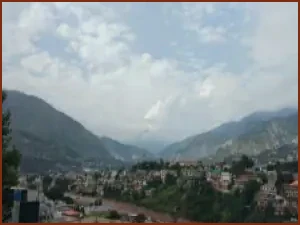
Commercial hubs and transport links in Pakistan-administered Kashmir have begun to tentatively reopen following weeks of intense political turmoil, though a heavy security presence remains visible across the region. In Muzaffarabad, the regional capital that houses the Prime Minister’s Secretariat and the Legislative Assembly, the Madina Market has finally resumed trading. Similarly, Mirpur, the region's second-largest city, has restored intracity public transportation, allowing residents to travel between Pakistan and the territory Islamabad refers to as Azad (Free) Jammu and Kashmir.
The return to daily life follows a highly contentious general election cycle held from July 27 to August 10, which has been marred by a severe security crackdown. At least 80 people have been killed across the region over the past three months. The election, widely criticized due to allegations of polling day irregularities and pre-election manipulation designed to favor established political groups, saw the Pakistan Muslim League-Nawaz (PML-N) and the Pakistan People’s Party (PPP)—the ruling coalition parties in Islamabad—emerge victorious.
“The elections were a sham. No one who actually wants any betterment for the locals participated in the election. It is not an election when all the votes go to one party: the Pakistan army,” said Tariq Rehman, a schoolteacher in Kotli.
Pakistan’s powerful military establishment has maintained tight administrative control over the region since the 1947 partition of the subcontinent divided the former princely state of Jammu and Kashmir between India and Pakistan. Both nations claim the territory in its entirety and have fought multiple wars over it. Following India's August 2019 revocation of Article 370, which stripped Indian-administered Kashmir of its special status, Pakistani government and military sources have considered plans to mainstream Pakistan-administered Kashmir, effectively treating the Line of Control as an international border. Meanwhile, calls to partition Pakistan's existing provinces have also gained momentum in recent months.
This geopolitical uncertainty has left local residents in limbo regarding their exact relationship with Pakistan. “They want us to be Pakistanis when they feel like it. They want us to be Kashmiris when they feel like it. But the recent bloodshed shows that they want us to remain captives to their power games. Who kills people for demanding that we should have a say in deciding our own future?” said Mir Hamza, a Muzaffarabad-based artisan who witnessed security forces firing on demonstrators. “My brother [cousin] is still in Rawalakot. We want to continue the movement until we can achieve our fundamental human rights.”
While a protest sit-in continues in Rawalakot, authorities have cut off access to the city and barred journalists from reporting. Internet blackouts have been deployed to restrict social media coverage, and new regulations require a No Objection Certificate (NOC) for any news reporting. Furthermore, multiple local and international publications have been blocked in Pakistan, including the Urdu outlet Daily Jeddojehad, which has been documenting the casualties of the state crackdown.
“Security agencies raided my home. In my absence, three of my family members were picked up. They told my family that my articles on Kashmir were anti-national and the raid was aimed at arresting me,” said Farooq Sulehria, the editor of Jeddojehad, who escaped arrest because he was in London. “I was in London, hence I was lucky to escape. However, I am not able to return to Pakistan.”
Sulehria added that numerous journalists and activists have been summoned by authorities to enforce complete censorship. “This is unprecedented. The state wants to deny the people of Jammu and Kashmir the possibility to voice their protest on social media against the violent repression. It wants to disseminate one-dimensional information and propaganda,” he said.
The state measures are aimed at dismantling a protest movement galvanized by the Joint Awami Action Committee (JAAC). Since September 2023, the JAAC has mobilized locals to demand control over local resources, focusing on issues such as electricity tariffs, commodity prices, and governance reforms. A central political demand of the JAAC is the abolition of the 12 legislative seats reserved for muhajirs (immigrants from Indian-administered Kashmir) out of the 53 total seats in the legislature. Critics argue that because these representatives can reside outside the territory, the system dilutes local representation and allows the military establishment to maintain its political grip.
In response, the Pakistani government has designated the JAAC as a terrorist organization. Authorities have filed sedition charges against its leaders, including Mir Hamza, and announced "head money" bounties for information leading to their arrest. Many JAAC activists have been detained, while others have gone underground.
The movement has also faced skepticism from some local business owners who have suffered from the ongoing instability. “I don’t know who they are, and whom they are fighting for. Some say they are Indian agents. All I know is that because of the violence and the internet shutdown I have lost significant business and customers,” said Mohammed Iqbal, a restaurant owner in Chakswari.
Even critics within the government acknowledge that most of the JAAC's economic demands aligned with majority sentiments, though they question the continued unrest. “All of the committee’s demands were accepted. But they continued to fixate over one [on seat reservation], causing so much turmoil. What did all this achieve for the locals?” asked Chaudhary Muhammad Saeed, a Mirpur-based PML-N leader who lost his seat in the recent elections.
Saeed noted that while voter turnout dropped to approximately 50 percent compared to the historical average of 60 percent, it did not indicate a total rupture between the population and the state. “Yes, some people are unhappy over certain issues, and yes, some political reforms are needed in Azad Kashmir. But what is more pertinent are economic reforms. There would be no need for such protests where there is financial stability,” Saeed said.
Some names of individuals in this report have been changed to protect their identities.
Related Articles
Md. Kazi Bijoy is a dedicated tech enthusiast and content creator with a passion for digital innovation. With years of experience in the tech industry, he specializes in breaking down complex topics into easy-to-understand guides. When he isn’t writing, he explores the latest gadgets and researches emerging trends in the digital world.