Space superiority is shifting from a mere count of active satellites to mastering space logistics, a domain where China is systematically building a strategic advantage. While Western analysts often focus on Chinese counterspace weapons and satellite numbers, Beijing's long-term plan centers on establishing the robust infrastructure and logistics necessary to command key points in space during potential crises or conflicts. True space superiority extends beyond protecting friendly assets from attack; it also encompasses shielding friendly forces across all domains from space-enabled threats while denying those same advantages to an adversary.
Historically, nations have sought the strategic high ground on land, in the air, and at sea. In the modern era, positions in space represent the ultimate high ground, enabling persistent surveillance, global communications, precision navigation, missile warnings, and rapid targeting data. In traditional maneuver warfare, as military strategist John Boyd recognized, the side that observes, orients, decides, and acts most quickly seizes the initiative. However, in space, maneuver is strictly bound by orbital mechanics, fuel limits, communications latency, and geometry. Simply launching satellites is insufficient; a capable space force must manage its delta-v budget, sustain its assets, and balance vulnerability against opportunity through strategic trajectory choices.
This reality underpins China’s unique definition of space superiority, which prioritizes space logistics and infrastructure tailored to the specific types of conflict it might face—whether a limited war, a protracted campaign, a gray zone conflict, or a major war in space. United States observers tracking Chinese space power may be watching the wrong indicators. For instance, while the orbital maneuvers of China's Shijian 21 and Shijian 25 satellites in July 2025 drew significant attention, such activities reveal very little about their ultimate strategic effects and purpose.
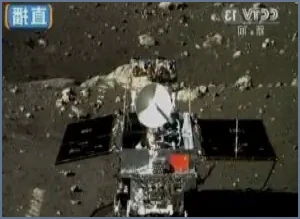
Instead, the most consequential progress lies in how China is solving the fundamental logistics of space warfare, starting with its lunar exploration program. The upcoming Chang'e 7 mission, scheduled for launch later this year, is designed to survey the Lunar South Pole for critical resources, particularly water ice hidden in permanently shadowed regions. If successful, Chang'e 7 will provide the essential data needed to sustain operations on and around the Moon, answering vital questions about water concentration, robotic accessibility, optimal landing zones, and areas that combine resource access with favorable sunlight and communication windows.
Utilizing lunar resources is highly strategic because transporting supplies from Earth is prohibitively expensive. Extracting lunar water at scale could support life-support systems and be separated into hydrogen and oxygen to produce propellant directly on the Moon. This capability becomes critical when Chang'e 7 is integrated with the subsequent Chang'e 8 mission and the proposed International Lunar Research Station, which China plans to build by 2036. Highlighting this strategic alignment, researcher Chi Wang and his co-authors noted, "Taking into account the future location of the lunar research station, the CE-7 [Chang’e 7] mission will select the lunar south pole region as its preferred landing area." Through these coordinated efforts, China is systematically assembling the scientific knowledge, surface experience, communications architecture, and robotics necessary to secure a persistent lunar presence and achieve true space superiority.
Related Articles

Meet Md. Rubel Rana
As a core contributor to Worlddincidents.com, Rubel Rana brings a unique perspective to the world of journalism. Whether it’s deep-diving into historical trivia or covering the latest global headlines, Rubel Rana is committed to delivering high-quality, high-impact articles. Their writing blends meticulous research with a compelling voice, helping readers stay informed and curious about the world around them.